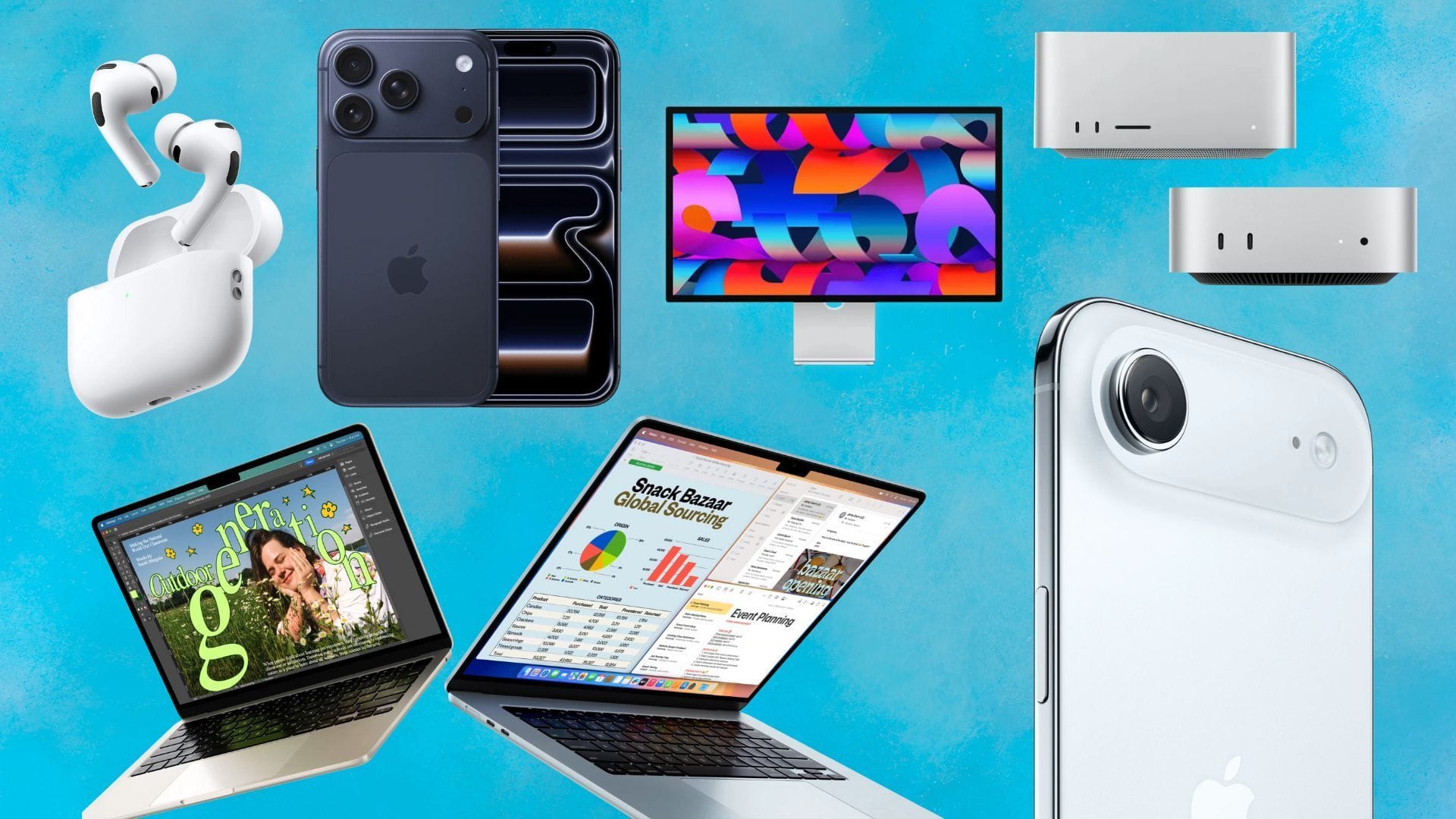
Apple is no longer just iterating—it's accelerating. The long-rumored "Ultra" roadmap is now confirmed through internal timelines, supply chain leaks, and strategic patent filings. This isn’t about minor upgrades. It’s a coordinated shift across iPhone, MacBook, and ecosystem devices, all built around AI, performance leaps, and a tighter integration between hardware and software. If you're waiting for your next upgrade, this is the moment to pay attention.
The term "Ultra" has evolved. Once a label for display quality or camera specs, it now represents Apple’s end-to-end vision: devices so intelligent, so tightly engineered, they anticipate needs before users even act. The roadmap confirms not just new products, but a new phase in Apple’s product lifecycle—one defined by machine learning at the silicon level and deeper automation across workflows.
The iPhone Evolution: Beyond the Camera Bump
The next iPhone generation isn’t just another annual refresh. It’s the first true AI-native iPhone, built to leverage on-device intelligence without sacrificing privacy. With the A18 Pro chip already in testing, Apple is pushing performance boundaries with a 6-core GPU and enhanced neural engine capable of 35 TOPS—up from 30 in the A17 Pro.
Real-world impact? Think instant scene optimization in video recording, where lighting, color, and depth are adjusted in real time based on context. Or a camera that learns your shooting habits—automatically switching to macro when you point at a flower, or enabling night mode when it detects low light and movement patterns.
But the changes go beyond the processor. Leaked schematics suggest:
- Always-on Siri processing – No more “Hey Siri” trigger; the assistant listens locally for lightweight commands.
- Thermal redesign – Vapor chamber cooling in Pro models enabling sustained performance during 4K60 video or gaming.
- Action button expansion – Now programmable via Shortcuts with haptic feedback confirmation.
- Brighter OLED panels – Up to 3,000 nits peak brightness for outdoor visibility.
One common mistake users make is assuming these upgrades are only for creatives or power users. In reality, the benefits are broad: longer battery life under heavy load, faster app launches, and smoother multitasking even with legacy apps.
MacBook Pro Gets the M4 Core Upgrade
The 14- and 16-inch MacBook Pro models are set for a major overhaul with the M4 chip—Apple’s first 3nm processor built for AI workloads. Unlike the M3, which focused on efficiency and gaming, M4 is designed for computational density. Early benchmarks show up to 40% faster GPU performance and 50% better neural engine throughput.
Professionals using Final Cut Pro or Logic Pro will see real-time rendering of 8K footage with AI-powered color grading. Developers will benefit from native AI model training on-device, reducing dependency on cloud APIs. Even casual users gain from smarter spotlight search, predictive app launching, and power-aware background processes.
Key MacBook changes confirmed:

- M4, M4 Pro, and M4 Max variants – All with increased core counts and memory bandwidth.
- 120Hz mini-LED displays on base models – No longer confined to Max configurations.
- Wi-Fi 7 support – Faster transfers, lower latency, better multi-device sync.
- New MagSafe design – Thinner connector, higher wattage (up to 140W).
One overlooked limitation: M4 Macs will drop support for Boot Camp. Apple is fully committed to its silicon transition, meaning Windows dual-booting is officially obsolete. Users relying on Windows-only software must now use virtualization (like Parallels) or cloud solutions.
Workflow tip: If you're upgrading from an Intel Mac, migrate now. The performance delta between M1 and M4 is stark—especially in code compilation, video export, and AI inference tasks.
iPad Enters the Pro Workflow Era
The iPad Pro is no longer just a tablet. With the M4 chip and redesigned OS features, it’s being positioned as a laptop alternative for specific verticals—especially creative and mobile professionals.
New capabilities include:
- Apple Pencil hover with AI prediction – The screen detects pen position 5mm above the surface, enabling context-aware tool suggestions.
- Stage Manager expansion – Up to eight external app windows via sidecar or display link.
- 1TB internal storage option – Finally matching MacBook Pro configurations.
- Face ID repositioning – Now works in landscape mode by rotating the TrueDepth camera feed.
Use case: A field architect uses iPad Pro with AutoCAD software, leveraging hover previews to select tools without touching the screen—keeping gloves on in cold environments. The device syncs changes in real time to their office MacBook via Continuity.
However, iPadOS still lacks full file system access and robust multi-window automation. For heavy productivity, MacBook remains the better choice.
Apple Watch: Smaller, Smarter, Always-On Health
The next Apple Watch Ultra is shrinking its footprint while expanding its intelligence. The new model features a narrower case (down to 41mm) but retains the 49mm battery life thanks to a more efficient S10 chip and LTPO 4.0 display.
Health monitoring goes deeper:
- Non-invasive glucose tracking – Still in validation, but expected in 2025 via optical sensor fusion.
- Sleep apnea detection – Using microphone and respiratory rate data.
- Emergency SOS via satellite on non-Ultra models – Now standard across the lineup.
Battery life reaches 36 hours in normal use and 72 in Low Power Mode—making multi-day hikes feasible without charging.
Limitation: The smaller form factor may reduce appeal for users who rely on the larger screen for navigation or workout metrics. Also, third-party app optimization for the new OS features lags behind.
AirPods Redefine Audio Intelligence
AirPods are no longer just earbuds—they’re AI-powered audio processors. The upcoming AirPods Pro 3 introduce:
- Adaptive Noise Synthesis – Instead of just canceling noise, they generate calming soundscapes based on biometrics (e.g., lowering heart rate with binaural beats).
- Voice isolation in crowds – Uses beamforming mics and neural processing to enhance one speaker in noisy environments.
- On-ear language translation – Live translation during conversations with real-time audio feed in your ear.

Example: A business traveler uses AirPods Pro 3 to negotiate in Tokyo. Their companion speaks Japanese; the AirPods translate responses into English with minimal delay—all processed on-device.
Current bottleneck: Battery life drops significantly when translation or deep noise synthesis is active. Expect 3–4 hours under heavy AI use, not the advertised 6.
The Hidden Piece: Apple’s AI Infrastructure
None of this works without Apple’s silent overhaul of its AI backend. While rivals rely on cloud-heavy models, Apple is betting on on-device intelligence powered by Private Cloud Compute—a secure server infrastructure that blends local processing with encrypted cloud support when needed.
This enables features like:
- Genmoji – AI-generated custom emojis from text prompts.
- Smart Reply overhaul – Context-aware responses in Messages and Mail.
- Photo curation – Automatic album creation based on sentiment analysis (e.g., “Happy Moments with Dad”).
Privacy remains central. Unlike competitors, Apple doesn’t retain user data for model training. The trade-off? AI features may feel less “magical” than Google’s or Microsoft’s—but far more secure.
Mac Pro and Studio Displays: For the Few, But Powerful
The Mac Pro returns with M4 Ultra—an unconfirmed but logically inevitable chip packing up to 32 CPU cores and 80 GPU cores. Targeted at studios rendering 16K video or developers training large language models, it’s the only desktop Apple offers with PCIe expansion.
Expected specs:
- Support for six Pro Display XDRs – 120Hz daisy-chaining via Thunderbolt 5.
- 192GB unified memory – For massive datasets.
- Liquid cooling option – For sustained 600W TDP workloads.
This isn't for most users. But for visual effects houses or AI research labs, the Mac Pro becomes a viable alternative to custom Linux rigs.
When Will These Devices Arrive?
Apple’s rollout is staggered but predictable:
- iPhone 16 Pro – September 2025
- MacBook Pro (M4) – October or November 2025
- iPad Pro (M4) – March 2026
- Apple Watch Series 10 / Ultra 3 – September 2025
- AirPods Pro 3 – Early 2026
- Mac Pro (M4 Ultra) – Mid-2026
Pre-orders typically open one week after announcement. For professionals, planning ahead is crucial—especially for enterprise deployments or studio upgrades.
Should You Upgrade Now or Wait?
If you’re on an iPhone 13 or earlier, or a pre-M1 Mac, the performance and AI gains justify waiting. But if you own an iPhone 15 Pro or M2 MacBook, the jump to M4 or A18 Pro offers refinement, not revolution.
Early adopters should be aware: new chips mean new thermal behaviors. Initial units may have aggressive fan curves or battery calibration issues. Let the first wave test the waters.
For businesses, a phased rollout—starting with creative teams—maximizes ROI while minimizing disruption.
Apple’s ultra roadmap isn’t about flashy features. It’s about making technology recede into the background, becoming intuitive, predictive, and reliable. The next generation of devices won’t just do more—they’ll understand more.
If you’re upgrading, target late 2025 for iPhone and MacBook. For iPad and AirPods, early 2026 is optimal. And if you're building workflows around AI, start testing Apple’s developer tools now—especially Create ML and Vision Framework.
The future isn’t just coming. It’s already in the lab.
Frequently Asked Questions
What does “Ultra” mean in Apple’s new roadmap? “Ultra” now refers to Apple’s full-stack integration of AI, performance, and ecosystem intelligence—not just hardware specs.
Will the new MacBook Pro support external GPUs? No. Apple continues to block external GPU support, relying instead on M4’s internal performance.
Can I use AirPods Pro 3 translation without an iPhone? Limited functionality works with iPads or Macs, but full translation requires iOS 18 and A18 or M4 chips.
Is the M4 chip faster than M3? Yes—up to 40% GPU performance gain and significantly better AI processing.
Will iPhone 16 have a port? Yes. All models will retain USB-C, with Pro versions expected to support faster data transfer (up to 40Gbps).
Can I still use my old accessories with new MacBooks? Most Thunderbolt 3 and USB-C accessories remain compatible, though full feature support requires Thunderbolt 5-certified gear.
Is on-device AI safer than cloud-based AI? Yes. Apple’s approach processes sensitive data locally, reducing exposure to breaches or third-party access.
FAQ
What should you look for in Apple’s Ultra Roadmap Confirmed: iPhone, MacBook and More? Focus on relevance, practical value, and how well the solution matches real user intent.
Is Apple’s Ultra Roadmap Confirmed: iPhone, MacBook and More suitable for beginners? That depends on the workflow, but a clear step-by-step approach usually makes it easier to start.
How do you compare options around Apple’s Ultra Roadmap Confirmed: iPhone, MacBook and More? Compare features, trust signals, limitations, pricing, and ease of implementation.
What mistakes should you avoid? Avoid generic choices, weak validation, and decisions based only on marketing claims.
What is the next best step? Shortlist the most relevant options, validate them quickly, and refine from real-world results.